
Table of Contents
TogglePool Cleaning vs. Disinfection:
Two of the most important aspects of maintaining a swimming pool are cleaning and disinfection . There are many methods, robots, and gadgets for cleaning a pool , and we’ll discuss them at another time.
We also have many options for disinfecting our pool: traditional chlorine, bromine, UVA (ultraviolet) light, salt electrolysis, oxygen, etc. Reindesa recommends one system or another to its clients depending on the circumstances, environment, or characteristics of the pool.
Of all the disinfection methods , saline electrolysis may be the most widely used in recent years.
What is saline electrolysis?
Disinfecting water with “natural salt” instead of “chemical chlorine” is one of the disinfection methods used for treating swimming pool water .
If you want to find out, don’t miss our video or check out the tips section on our website.
Electrolysis consists of simulating the behavior of the sea in your pool.
We lightly salt the water by adding common salt to your pool, in a proportion nine times less than that of salt in the sea, in a proportion similar to that of a tear.
The chlorination cell carries out the electrolysis process by which salt (NaCl) is transformed into sodium hypochlorite (NaClO) dissolved in water, which is a powerful disinfectant that destroys all microorganisms that may be present in the water.
The cell will automatically generate the free chlorine needed for your pool without needing to add anything other than salt to the water.
Water disinfection through the electrolysis process
It’s one of the most widely used disinfection systems today. It’s a machine that can be installed in any existing or newly constructed swimming pool.
The saline electrolysis process: salt for swimming pools
The idea and process are very simple. This pool disinfection technique is based on adding salt to the pool. The amount: Approximately 5 kg per cubic meter. Or, in other words, 5 grams per liter .
The water has a salty taste, like a tear. But the taste of the salt will be barely noticeable since it is seven times less intense than that of seawater.
The prices of saline chlorination
We will have to make an initial investment, but we will not take long to recover it since we will not have to buy any type of chlorine or disinfectant for the pool.
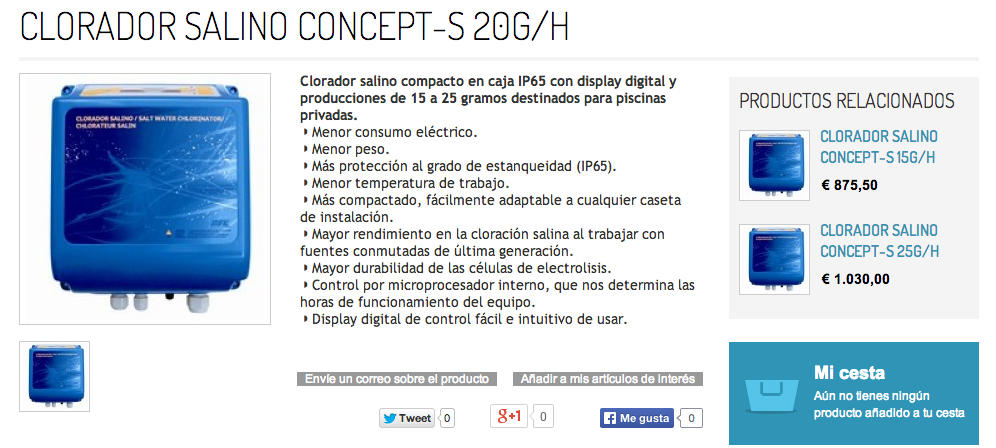
The device itself generates the salt disinfectant for the pool . Therefore, the only expense associated with a salt electrolysis system is purchasing the salt itself: carrying around two or three bags of salt a couple of times a year .
Pool salt: the advantages of saline electrolysis
– Home production of disinfectant. We have our own chlorine “factory” at home, which saves us a significant amount of money each year.
– Self-regulating : The RP probe measures the amount of chlorine the pool needs at any given time. The more swimmers, the more disinfectant is required. It’s an automatic system that disinfects your pool water without the need for monitoring or adding any chemicals.
– pH controller included : the machine already includes the pH controller and meter , so there’s no need to buy any additional equipment. You can visit our article “How to measure the pH of a swimming pool?” .
– No irritation : to skin, hair, or clothing. It is odorless, does not irritate the eyes, and does not dry out the skin.
– We avoid buying chemical products . You can be away for several days, even weeks, and you will find the pool perfect just as you left it.
Reindesa installed the first salt electrolysis device in 1990 and since then demand has continued to grow, making this device an almost indispensable helper for the care of your swimming pool .