
Winterizing the pool is an action that pool maintenance experts recommend for its many advantages, especially for those users who personally maintain their pool.
Water is a scarce resource and as such we must take care of it; therefore, we must avoid a practice that was very widespread years ago, which is to stop the pool machinery, let the water run out, and then empty the pool annually to refill it.
Therefore, winterizing the pool helps us save water, chemicals, time , and above all, makes starting it up much easier in the spring.
The proliferation of bacteria in a swimming pool is closely linked to the water temperature . When the water exceeds 15ºC, it is more prone to bacterial growth, leading to problems in the pool such as cloudiness and algae blooms .
Therefore, when the water temperature drops below 15ºC for a sustained period, our approach to pool treatment must change, whether we maintain it with chlorine tablets or with saline chlorination .
From that point on, in both cases we must replace the chlorine—whether generated by a salt chlorinator or from tablets—with a specific product specially formulated for treating pool water during the winter. This product is known as “Winterizer” or “Winterizing Agent.”
It is a chemically formulated product designed to ensure the preservation of pool water , preventing its decomposition during the winter.
Properly winterizing your pool will help you maintain better water quality during the summer. And in the case of pools with salt chlorination, it will extend the life of the system’s cell, which is a rather expensive replacement.
As we have already indicated, the process of winterizing the pool should never be carried out until the water is continuously below 15ºC , otherwise algae will appear.
STEPS TO WINTERIZE YOUR POOL
- Clean the pool , using a good brush and a descaling product if necessary. Brush the walls well and use the pool vacuum.
- It regulates the pH between 7.2-7.6.
- Perform a shock chlorination with granular dichlor , adding 15 gr. per m3 of water.
- Leave the filter running overnight (this shock treatment is best done when the pool is not in direct sunlight, in the late afternoon or evening).
- The next day, add the “star product”, Reindesa INVER-REIN hibernator at a rate of 5 liters per 100 m3 .
- Leave the filter running for 8 hours to ensure perfect product distribution.
- The next day, perform a good filter wash (about 2 minutes of washing and then 1 minute of rinsing).
- If you live in a moderately cold area without frost, run the filtration system for one hour a day to prevent stagnant water from spoiling. If you live in a cold climate with a possibility of frost, it’s advisable to lower the pool water level below the skimmers, drain the pipes and filter, and place a floating object on the surface of the pool to cushion the pressure of the ice, such as polystyrene foam or cork. In this case, the filtration system will need to be turned off during the period of extreme cold. Afterward, you can refill the pool and run the system for one hour until spring arrives.
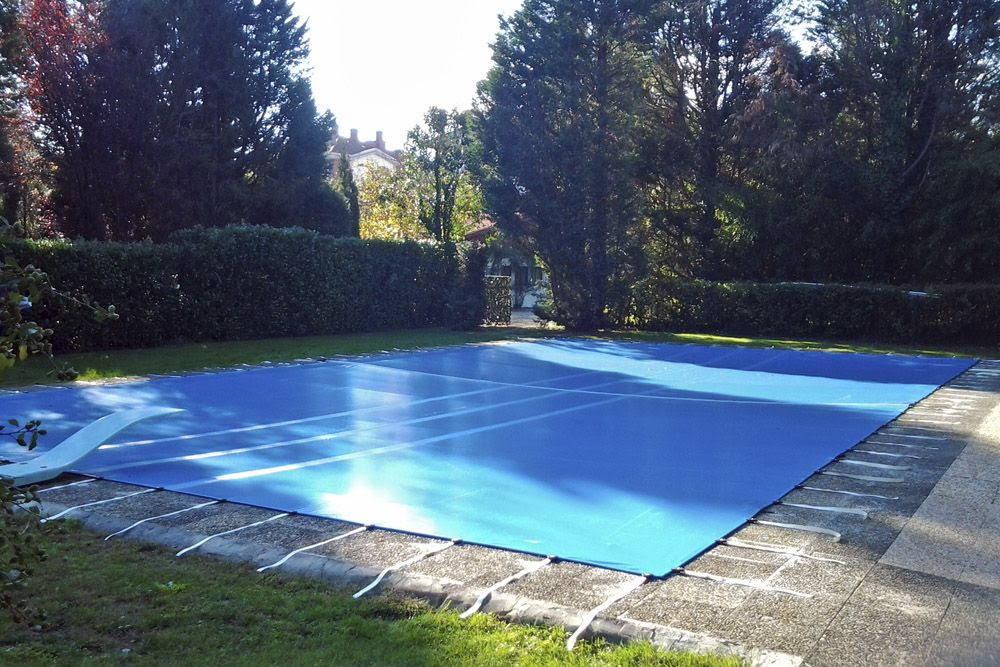
- Above all, don’t forget to cover the pool with a good cover .
- It is essential to repeat the winterizing treatment every 3 months while the pool water temperature remains below 15ºC. Also, check the filter pressure and if it is close to the red zone on the gauge , perform a thorough backwash and rinse.
- If torrential rain occurs, it is necessary to carry out a shock treatment with Dichlor (granular) at a rate of 15 gr. per m3 .
Don’t forget that preparing your pool for winter is just as important as getting it ready for summer . Taking care of your pool in winter will save you a lot of work and wasted product in the summer.
If you have any questions, please don’t hesitate to contact us so we can help you.