
When we think about how to disinfect and clean a swimming pool , the first thing that comes to mind is using chlorine or bromine . And that’s normal, as these are among the most traditional methods that have been used for a long time. However, it’s well known that these chemicals can cause reactions in some people, especially skin and eye irritation. But what if we told you there are better and equally effective alternatives to the traditional methods? Or that it’s possible to say goodbye to chemical chlorine and its consequences? The answer is saline chlorination . Keep reading if you want to discover more details and learn about the advantages of disinfecting your pool in a more natural way !
WHAT IS SALT CHLORINATION?
Saline chlorination, or saline electrolysis, involves the transformation of salt (sodium chloride) into chlorine (sodium hypochlorite) using electricity . This means the autonomous production of chlorine from saltwater, achieved by adding an electrolysis unit, such as those from ZB, to the water treatment system. This process yields a more natural and harmless antibacterial agent that, by acting as a disinfectant and flocculant, keeps the water free of microorganisms, bacteria, and fungi. It performs the same function as conventional chlorine, but without the risks. Furthermore, the remaining salt concentration is almost imperceptible , resembling the taste of a tear.
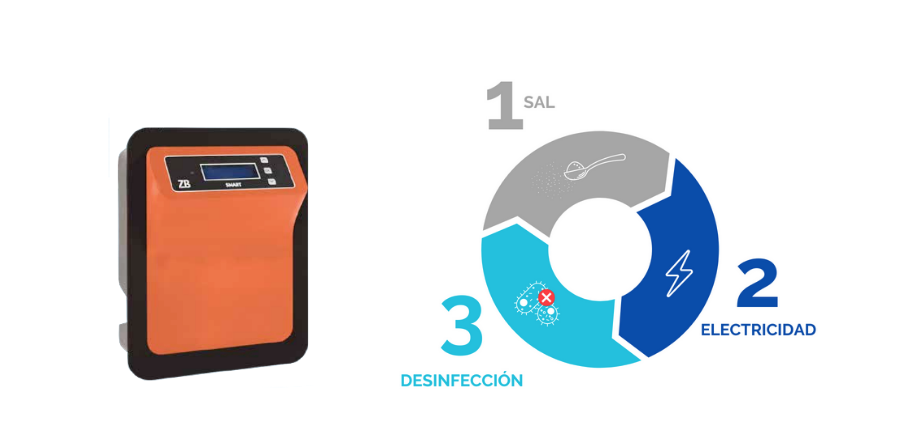
THIS IS HOW A SALT CHLORINATOR WORKS TO DISINFECT YOUR POOL NATURALLY
At a technological level, the salt chlorinator has a cell and two electrodes (positive and negative) that generate an electric current , separating the water into its elements (oxygen, hydrogen, salts, and minerals). The dissolved salt is then transformed into sodium hypochlorite (free chlorine), a powerful disinfectant that does not degrade and does not generate toxic waste, as it is destroyed during the process.
Furthermore, this process creates a continuous cycle, so you won’t need to constantly replenish the salt (once a year is enough), unless evaporation has occurred and it becomes necessary. Oh! And since it’s automatic, the electrolysis systems can even monitor the pH level on their own to ensure everything is perfect.
The result is much higher quality water , greater ease of maintenance, and significant cost savings by eliminating the need for chemicals such as algaecides, flocculants, and, of course, common chlorine, making it a much more ecological and environmentally friendly process.
ELECTROLYSIS, ONE OF THE OLDEST PROCESSES IN THE CHEMICAL INDUSTRY
Now that you know what electrolysis is and how to disinfect your pool more naturally, let’s take a look at its history. Did you know that the electrolysis of salt to produce sodium hypochlorite began in the industrial sector using seawater?
For example, it was used in the cooling systems of both coastal power plants and large ocean-going ships . Due to their long voyages, these systems were susceptible to the growth of algae and other microorganisms, which was prevented by the chlorine generated in the water. Furthermore, being able to generate this chlorine directly from the sea eliminated the problem of transporting and storing salt. A very good idea, isn’t it?