
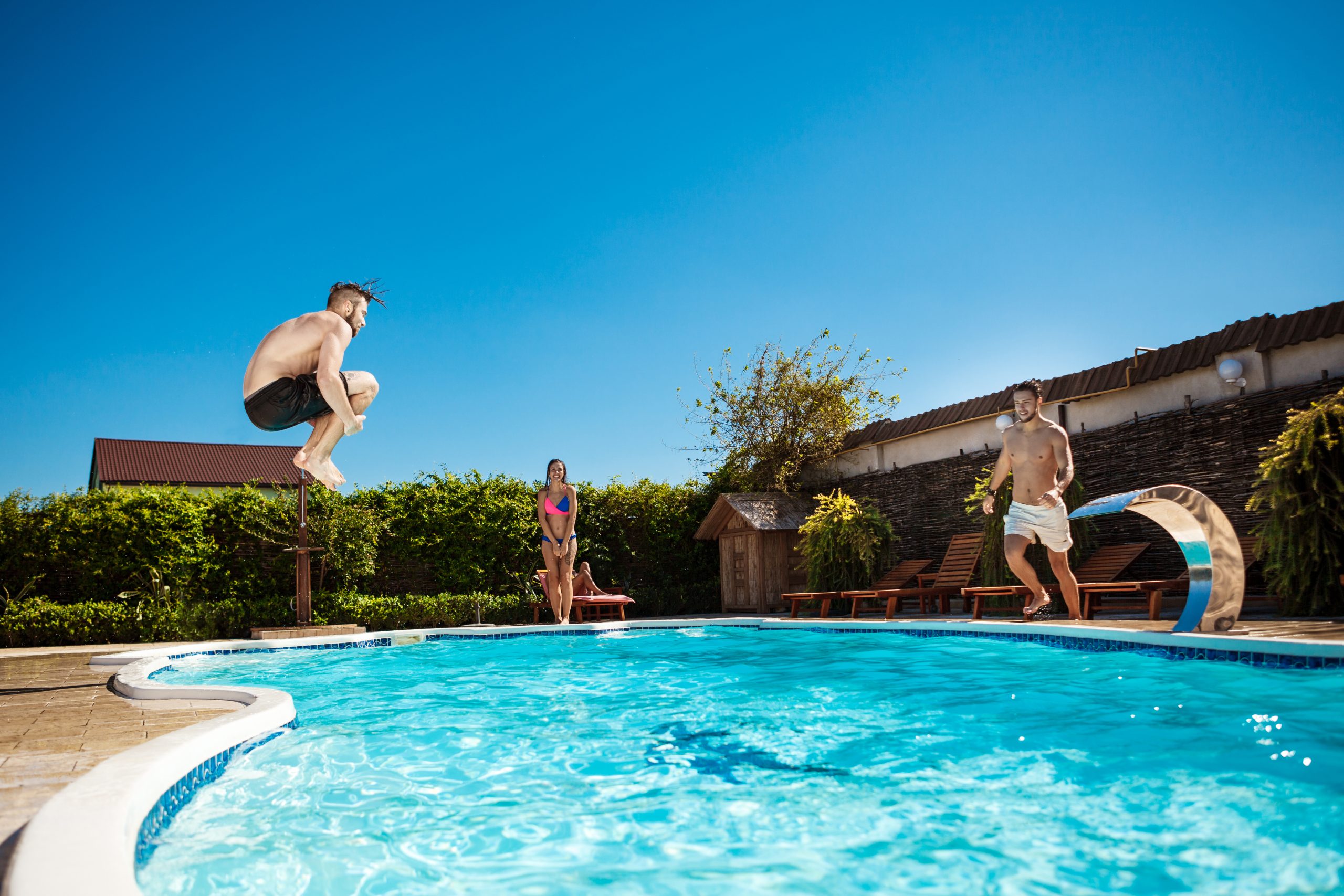
With the arrival of warmer weather comes the desire to get the pool ready for the season, right? Our recommendation is always to be proactive and start preparing the pool while it’s still spring . This gives you more time to get it ready and perfect, carrying out any necessary maintenance repairs. Plus, if you followed our advice and winterized it in the fall, or even heated it and enjoyed it during the colder months, getting it ready will be even easier! Shall we begin with the 6 key steps to get your pool ready?
1. THE WATER TEMPERATURE SHOULD BE 12ºC
This is the recommended water temperature for preparing the pool, ideally not exceeding 15ºC . Why? If we wait longer to reopen the pool, a higher temperature will cause bacteria, algae, and fungi to proliferate more quickly (requiring an extra step in the preparation process), and will deteriorate the water quality.
2. REMOVE AND CLEAN THE POOL COVER OR PROTECTOR
Have you kept your pool covered with a cover or tarp ? Great! It’s time to remove it, clean it thoroughly, and store it until the end of the season (or until you want to protect it during the summer to prevent evaporation on days you’re not swimming). If you have them, also remove any antifreeze floats.
3. CHECKING SUBMERGED ACCESSORIES
We’re referring to baskets, skimmers, grates, ladders, or the gutter (the latter if you have an infinity pool), as these are places where mold or algae can grow. Checking these areas also allows us to make sure everything is in good condition or if any parts need replacing or better secured.
4. LEVEL THE PH OF THE POOL WATER
You probably already know that the pH level of your pool should be between 7.2 and 7.6 . If it isn’t, you’ll need to adjust it because the chemicals (disinfectants, algaecides, etc.) you add later won’t work properly. Furthermore, if the pH is higher than recommended, there’s a risk of skin and eye irritation. Conversely, if the pH is lower, the pool structure will corrode and deteriorate.
If you have a pool with salt electrolysis , you must check that the salt concentration level is correct, about 4.5g per m3 of water, a figure that can be checked on the salt chlorinator equipment.
5. CLEAN THE BOTTOM AND WALLS
For this step, you can use an automatic pool cleaner to do it for you in no time, or you can do it manually by brushing the waterline, walls, and steps to remove any traces of dirt. If you’ve kept your pool in good condition over the winter, this step shouldn’t require too much effort.
6. START THE FILTRATION SYSTEM
Is everything clean and balanced? Perfect, now let’s start up the pool’s filtration system. Make sure the pump is working properly and that there’s good water circulation through the filter. If it’s been off for the winter, it’s essential to check that it’s not clogged . You can leave the system running for about 24 hours to make sure everything is in order and the water rebalances.
For other times, you can calculate the necessary filtration time using the formula: Water temperature / 2 = Filtration time , so if the water is at 15ºC, the filtration time will be 7.5h.
What about the filters ? If it’s a sand (silica) filter , check the filter media by opening it. If it’s compacted, you’ll need to use descaling products for sand filters. If the sand is fine, simply check if you need to add more filter media. For cartridge filters , remove the cartridge, clean it under running water or with a hose, and replace it if it’s badly damaged.
Got it? Well, now you know how to get your pool ready for the summer season ! Remember that from March/April until June, it’s important to regularly check all the parameters (pH, chlorine and chemicals, or the salt level) so the water doesn’t deteriorate again before summer finally arrives. Only in this way can we ensure that the pool water is in optimal condition for your enjoyment!